Read
Read  Watch
Watch  Listen
  Comment
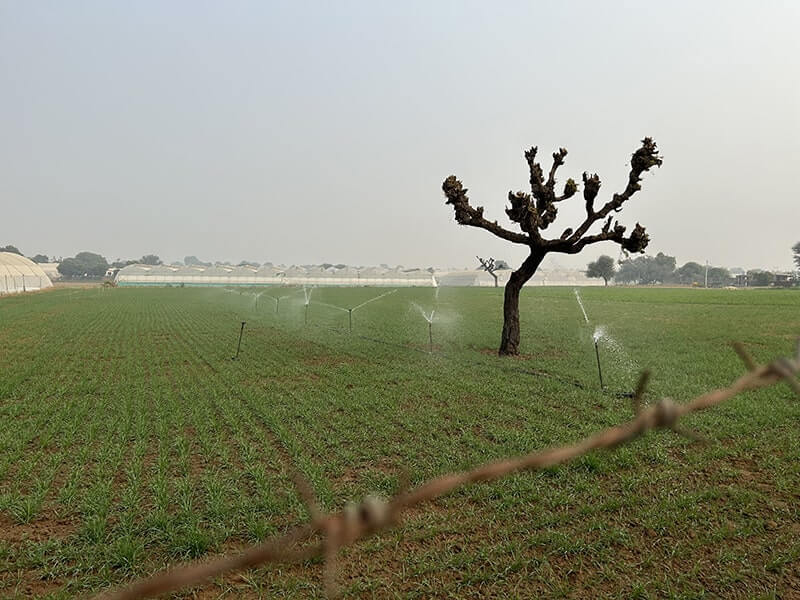
The 500-odd farmers of Gurha Kumawatan, a village in arid Rajasthan, are now millionaires thanks to polyhouse farming. Their hard work, innovation and unlimited ambition offers a path to prosperity for others in India.







How a food scientist who never advertised, never raised equity, and never once compromised, built the country’s largest mushroom business.
 TR Vivek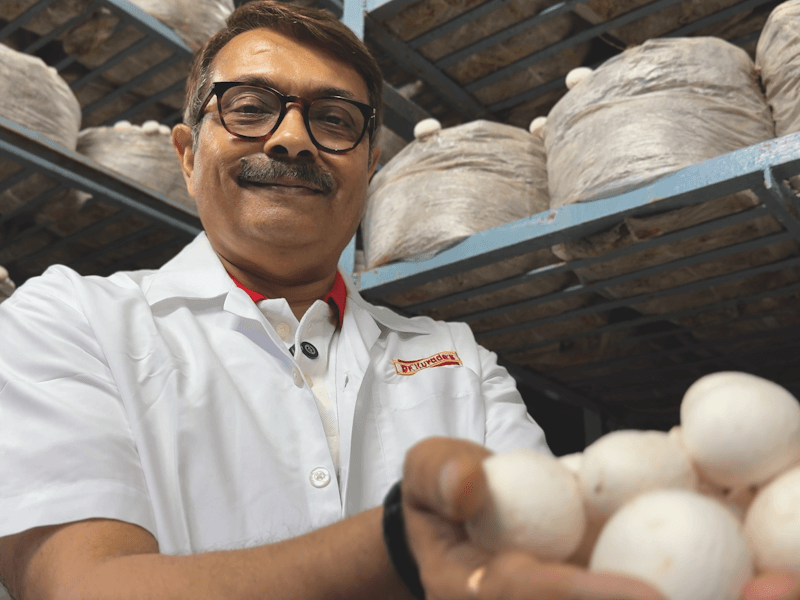
Despite Sangam Kurade’s upbringing in big cities of India, college education in the US, and the fact that he is a successful entrepreneur in agriculture — one of the toughest industries to be in this country — he is a true-blue Goan who embodies its Susegad zeitgeist. It’s a way of life that prizes sun, siesta, feni and contentment over frantic ambition.
When I land up in Goa to meet Kurade, his first order of business is to draw up a meal-by-meal itinerary for me that offers a combination of Goa’s best beaches and food.
To tailor a trip to my vegetarian diet wasn’t just a googly. “That’s a tougher challenge than running a mushroom business.” But the challenge was met, only with the pre-condition that all conversation post 5 PM take place in the company of beer.
His interest in the good life is deceptive.
Susegad Meets Science
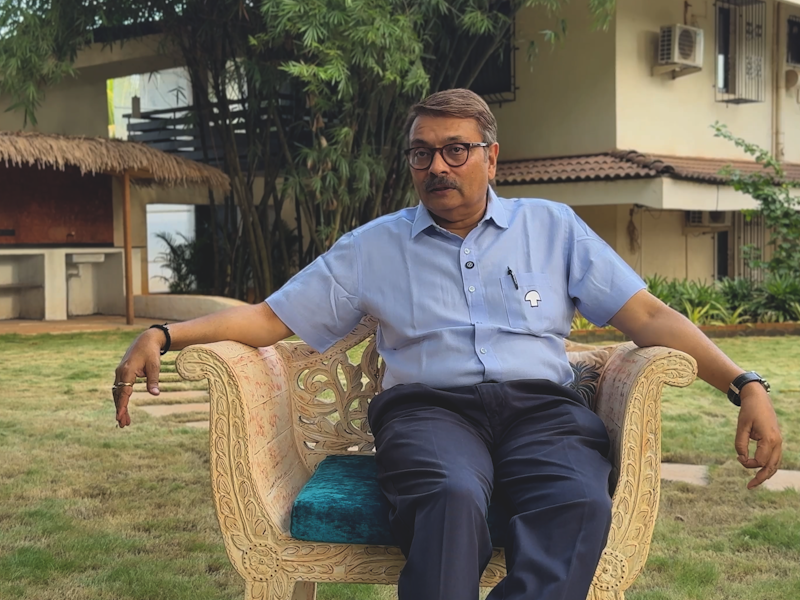
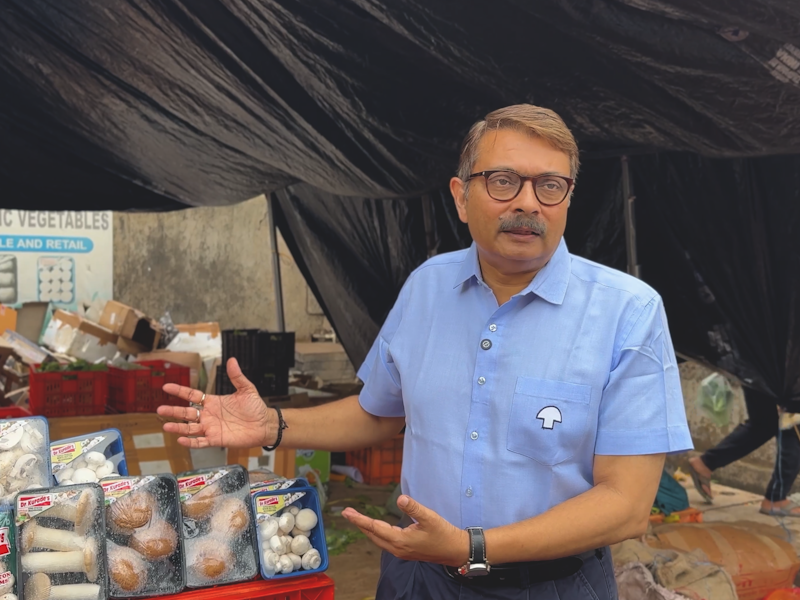
Sangam Kurade, 64, tall, slightly hunched, wearing thick, black-framed owlish glasses, and always clad in crisp short-sleeve shirts, is the undisputed mushroom king of India.
He grows and sells 30,000kg of mushrooms every day, from the biggest supermarket chains to the neighborhood vegetable markets of the country, with sales worth Rs 200 crore annually. To build a pan-India business in a category as unforgiving as fresh food is rare enough. He has done it with a scientist’s signature on every pack, under the brand name Dr Kurade’s.
In food and agribusiness, there are several companies with revenues that top a billion dollars. There are mega food and commodity brands owned by companies such as ITC, Godrej, Hatsun Foods and Heritage in dairy or Venky’s in poultry. However, all such companies are traders and aggregators. They buy from a vast network of farmers, and open markets, and then process, package and sell them under their brand name. Only in plantation crops like coffee and tea does true vertical integration exist. The Tata Group, for instance, owns the estates and the entire value chain, right up to the shop shelf.
Similarly, Dr Kurade’s owns its farms, produces its own compost and spawn, grows and packs its mushrooms, and sells them under its own brand. Nothing in the farm-to-plate chain is farmed out. And, building a brand and supply chain in a fresh, perishable category is tougher still. You cannot warehouse mushrooms like tea, coffee or grains.
“Nobody in India grows mushrooms anywhere near our scale of 30 tons a day. There are some who do 4-5 tons. For them mushrooms are just one part of a diverse portfolio. As a food scientist and technologist, this is my sole focus. My team lives and breathes mushrooms,” says Sangam Kurade.
That single-mindedness, it turns out, runs in the family.
The Legacy of Determination
His grandfather Gopinath and father Anand were both freedom fighters during the Portuguese rule of Goa. In one underground campaign, a teenaged Anand Kurade was captured and forced to say “Bon Portugal.” When he kept chanting “Jai Hind” instead, he had his teeth hacked by a bayonet. The Kurade family was blacklisted in Goa.
In the days of exile, Anand Kurade got a degree from Pune’s renowned College of Agriculture. He got a PhD in food science from the University of Massachusetts, Amherst. At Amherst, his roommates were Bansi Lal Amla and Hormusji Parpia, who both went on to head the Central Food Technological Research Institute in Mysuru. Anand Kurade himself had become a legendary food technologist in India who helped private sector firms set up food processing plants. When Goa was liberated in 1961, people carried him on their shoulders and gave him a hero’s welcome.
Sangam Kurade followed in his father’s footsteps and got a master’s degree in food technology from the University of Hawaii and a PhD in food science from the University of Tennessee. After returning to India a decade later, he joined his father’s flourishing consulting practice based in Delhi, helping Indian companies get into canned and preserved foods.
By the early 1990s Sangam Kurade was keen to come back to his roots in Goa.
An Accidental Entrepreneur
“I wanted to use my expertise and build something around intensive, high-value agriculture. Conventional farming was never an option. The landholding in Goa was much smaller than states like Maharashtra. To make it a viable business I needed at least 50 acres.”
Aquaculture was attractive, given his master’s degree in seafood, but he would have to rely on waterbodies he couldn’t own. Floriculture was an emerging opportunity, but the market for flowers was seasonal. By a process of elimination, Kurade settled on mushrooms.
“At the time I was doing a study on mushrooms for my father. I had some data with me. It seemed a good choice because it could be cultivated indoors round the year without the impact of weather. It’s a food that could have a national play, and nobody was doing it at scale anyway,” recalls Kurade.
In 1993, he drew up a project report and walked into the general manager’s office at ICICI in Mumbai’s Ballard Estate. Unimpressed by the idea of growing fungus that no one in India ate or was likely to, Kurade was shooed away in short order. As he was walking out, a burly American pulled him into his own room and asked to see the file. Harry Martin represented USAID, the American government’s development agency, which in partnership with ICICI was looking to fund young Indians in sustainable food and agriculture. “Martin grabbed me by the arm to the GM’s room and said, this is exactly the kind of business we are in the business of funding.” The consultant became an entrepreneur, almost by accident, with a soft loan of Rs 1 crore.
The decade Kurade spent studying in the US certainly played a part in sealing the deal with USAID. Securing a loan was the easiest part of starting up. “Forget selling mushrooms when you don’t have the foggiest idea of how to grow them. I created five bare growing rooms with basic refrigeration on a piece of ancestral land in Canacona where my grandfather grew coconuts. I had to learn how to grow mushrooms by trial and error, and then train others,” he says. While the proposal on paper had a target of growing 500kg a day, over two years Kurade had learned to grow a paltry 50kg.
Even as Kurade came to grips with production, there was the matter of finding a market. The chefs in touristy Goa hotels knew how to use mushrooms, the households had little idea.
“I would take two kilos of fresh mushrooms every day to Mapusa, the biggest fresh food wholesale market in Goa, plead with traders to buy it, and take back a kilo of unsold mushrooms back the next day,” Kurade says.
Mapusa Market Lessons
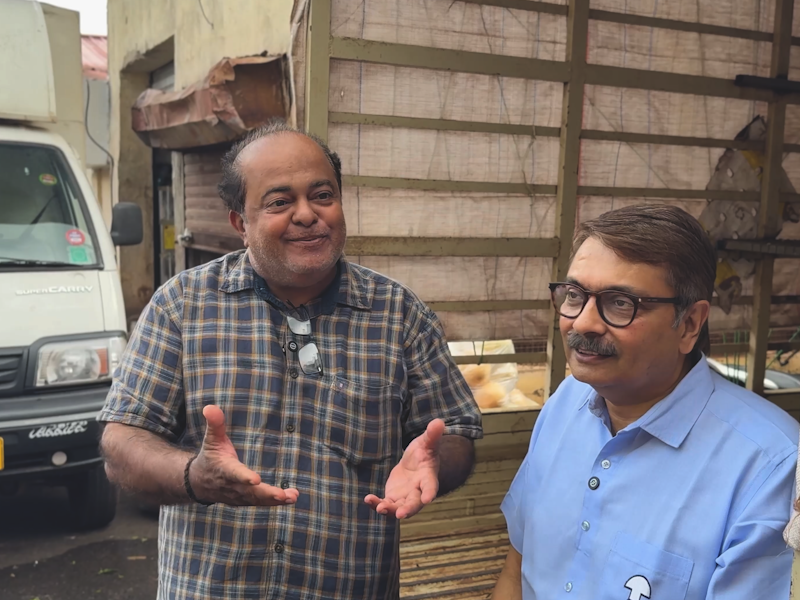
By eight in the morning, the chaos at Mapusa market subsides considerably, but vegetable rot in the light rain helps maintain the mess. Irfan Khatib’s family has been trading here in fresh produce, especially exotic fruits and vegetables for more than 50 years. He is the first vendor Kurade took his mushrooms to in the early days.
“I still can’t forget the day when he walked into my shop wearing crisp white kurta pyjamas, carrying a basket of mushrooms, and said I want to start selling here. I was skeptical because the fresh food business is dangerous and unpredictable. Those days the market for mushrooms in all of Goa was just about 50kg,” says Khatib, a short, stocky man with a bald pate and speech that knows no punctuation.
Kurade learned the ropes of supply chain and consumer behavior from traders like Khatib. He started selling mushrooms in 200g packets that households could buy for one meal use.
“I used to stand right here and tell buyers what a mushroom was, how to cook it, its nutritional qualities and health benefits. It was a fervent plea I had to make every day,” says Kurade.
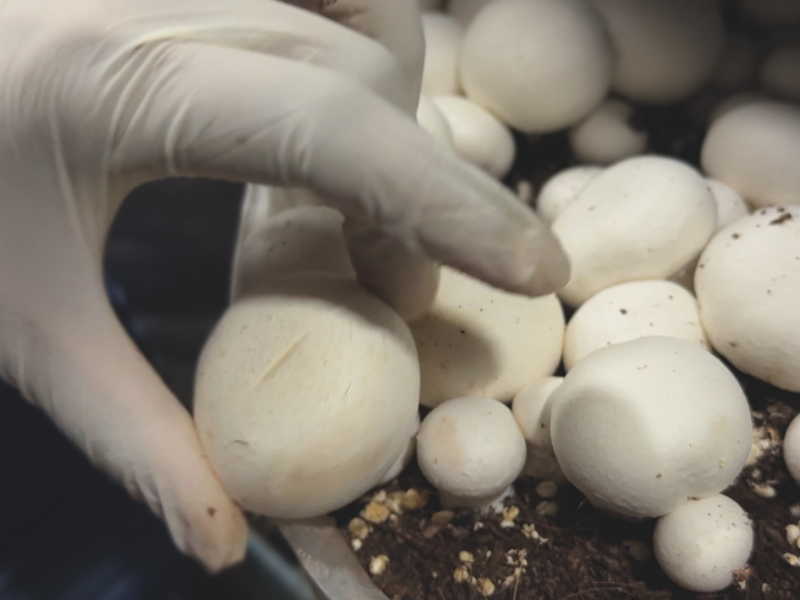
The mushrooms were branded White Pearls, with a frog on a mushroom head as the logo. “Goa is a small place where everyone knows one another. People were anyway referring to my produce as Dr Kurade’s mushrooms. Since the word of mouth was so strong, they asked shopkeepers for Kuradye chi mushroom rather than White Pearls. That’s how the brand was born.”
“I really appreciate what he has done for Goa and Goans. Whenever I go to Bengaluru and see every shop selling Dr Kurade’s mushrooms, I feel immensely proud. It’s like how people in a shop ask for Bisleri water or Kingfisher beer, today if it is mushrooms it is Dr Kurade’s,” Khatib says.
To understand the unique nature of large-scale mushroom farming, we need to understand their biology.
The Third Kingdom
Mushrooms are fungi. Just as plants and animals have their own kingdom, so do fungi, a kingdom of their own. If you are a believer, they are the closest thing to God: omnipresent, from the deepest seafloors to deserts to polar permafrost, but invisible until they choose to fruit. Like Brahma, Vishnu and Shiva in Hindu cosmology, they birth, nourish and decompose life on earth. And they have been at it for a billion years.
“They are eating rock, making soil, digesting pollutants, nourishing and killing plants, surviving in space, inducing visions, producing food, making medicines, manipulating animal behavior, and influencing the composition of the Earth’s atmosphere. Fungi provide a key to understanding the planet on which we live, and the ways that we think, feel, and behave. Yet they live their lives largely hidden from view, and over ninety percent of their species remain undocumented. The more we learn about fungi, the less makes sense without them,” wrote biologist Merlin Sheldrake in his seminal 2020 book Entangled Life on the third kingdom.
The mushroom is simply the fruit of this invisible kingdom. What we eat is just the tip of something vast and ancient.
For centuries, farming mushrooms was more like dark magic than agriculture. While Chinese growers figured out how to raise shiitake mushrooms on fallen tree logs some 800 years ago, Western commercial mushroom farming really took off in the 1600s in France, where melon growers found white button mushrooms or Agaricus bisporus, the most widely grown variety today, popping up in warm piles of horse manure. To get the dark, damp, cool conditions mushrooms need to fruit, 19th-century French farmers moved operations underground into the vast limestone catacombs beneath Paris, creating the world’s first indoor farm industry.
The real revolution came in the 20th century, when scientists replaced wild, dirty spores with sterile, laboratory-grown “grain spawn,” wheat kernels coated in pure fungal culture, and synthetic compost so that growers no longer relied on horse manure. By the 1980s, Dutch engineers had automated the process further still, with computerized climate control systems and aluminum growing racks that could be fine-tuned by the hour. Today, large-scale mushroom farming has evolved into “agrifacture,” a high-tech, multi-billion-dollar global industry where thousands of tons of mushrooms are grown every day inside giant chambers with precision-controlled atmosphere completely independent of the weather outside.
“Each mushroom is a bundle of nutrition. Every 100g of mushroom contains 3g of protein, one of the highest in a non-animal, fresh food source — as much as in spinach or broccoli. They are naturally low in calories, fat, and sodium, but packed with immunity-boosting vitamin D, B-complex, essential minerals like selenium and potassium, which are good for the heart and blood pressure. Not to mention antioxidants, and special fibers called beta-glucans that feed your gut’s healthy bacteria,” explains Kurade.
Dr Kurade’s mushrooms retail for about Rs 250 a kilo, a shade above the cheaper, unbranded stuff on offer elsewhere. Even so, it remains an affordable source of nutrition. But India’s dietary dilemma over whether mushrooms are vegetarian, still persistent in several communities, has limited their everyday adoption. “Let me put it this way, yes it’s neither a plant nor animal, but grows and sets root in completely organic, chemical-free compost like any other vegetable. So it’s completely vegetarian. In fact Covid-19 was a great inflection point for mushroom sales in India when everyone was looking for immunity-boosting food,” says Kurade.
Agrifacture at Scale
Like any crop, good soil is fundamental to growing good mushrooms. But mushrooms don’t need soil. They require moist compost teeming with microbial life.
Dr Kurade’s state-of-the-art factory in central Goa’s Usgaon includes a centralized compost yard. In steamy Goa of mid-June, where each second outdoors compounds the sweaty disarray, the compost yard that smells of septic tank is knockout-by-nausea territory.
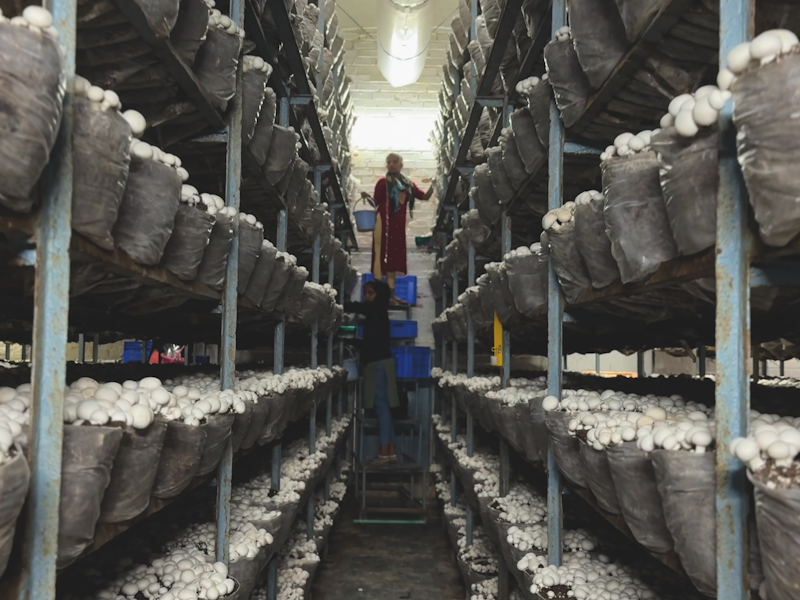
Here, nitrogen-rich chicken manure is mixed with decomposed paddy straw, sugarcane fiber, and oil cakes, and sterilized for 21 days. When this mushroom soil is loose and smells no different from the earth, it is inoculated with spawn and packed into 10kg plastic bags.
Each bag is a piece of land that yields 3kg of mushrooms. Dr Kurade’s plant fills 10,000 such bags every single day.
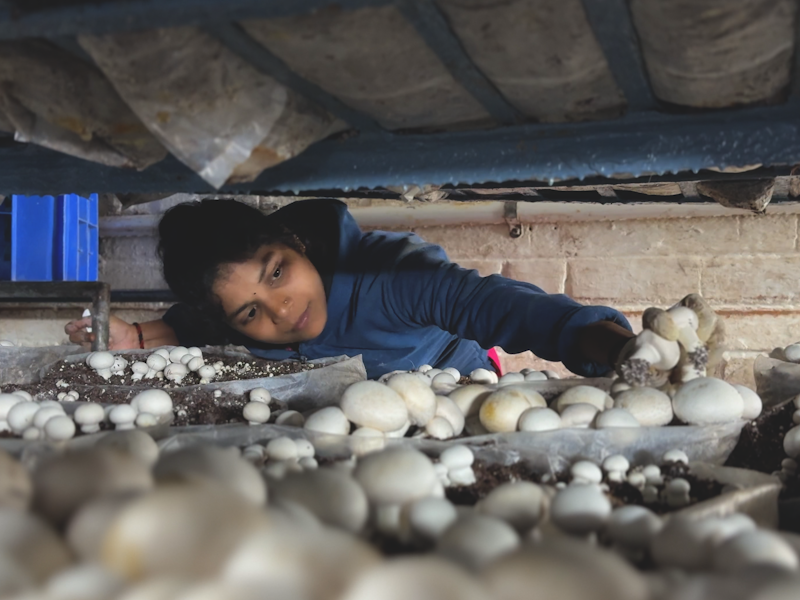
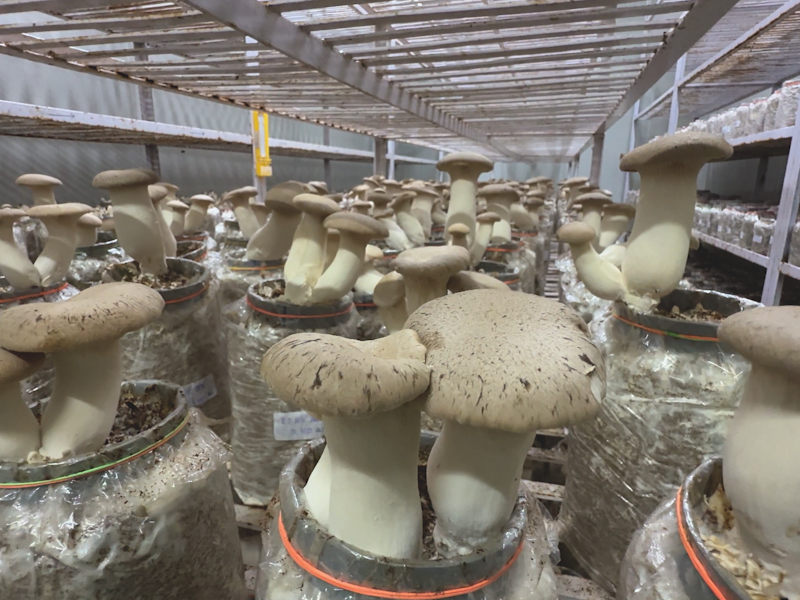
These bags are then locked away in growing rooms. Each growing room is the size of two tennis courts. 6,500 grow bags are stacked from ceiling to floor on galvanized steel racks resembling an IKEA warehouse. The temperature is controlled. The moisture is controlled. The air is controlled. The compost bags are watered automatically. Nothing here is left to chance or season or weather. They smell like a sterilized hospital ward. This is not a farm. This is agropolis. A veritable city of mushrooms where agriculture meets the precision of a factory and the patience of a laboratory.
The bags start producing harvestable mushrooms after 20 days; each bag produces 3kg of mushrooms over 21 days. The mushroom and its thread-like mycelial network that grows through the compost are so delicate that they have to be picked with soft hands. Not uprooted vertically but gently like unscrewing a water bottle. Which is why women are usually employed for the harvesting process.
Inside the Agropolis
And this agropolis never sleeps. The harvesting happens 24/7 every single day of the year. This finicky fungus is forever in a race against time.
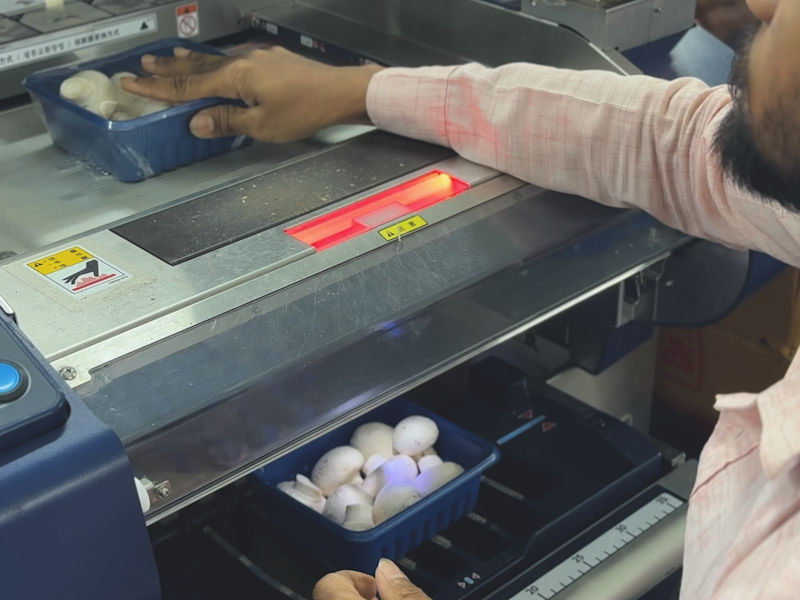
“We don’t even stop work for Ganesh Chaturthi, the biggest festival here. That’s the nature of mushrooms. They have a shelf life of two days at room temperature. They are dainty like flowers. To ensure that mushrooms reach Mumbai to Trivandrum, at the southern tip of India, which takes 10 to 17 hours by road, we need to harvest fresh, pack fresh, be gentle and yet move fast. Refrigerated trucks don’t make economic sense. So we use innovative ice-gel packs to keep them fresh,” explains Kurade.
India’s mushroom market is estimated to be barely more than Rs 3,000 crore. Per capita consumption is less than 100g a year. But it has been growing at 15% annually.
In a fragmented market dominated by small local growers, there are perhaps half a dozen organized players, each producing 4 to 5 tons a day. With a daily output greater than all of them combined, he is in a category of one.
But there are breakneck expansion plans in place: to double capacity in two years and hit 100 tons a day in five, and eventually reach the scale of Chinese firms that set the benchmark for mushroom production and innovation. China dominates the world’s mushroom industry, accounting for about 95% of global production.
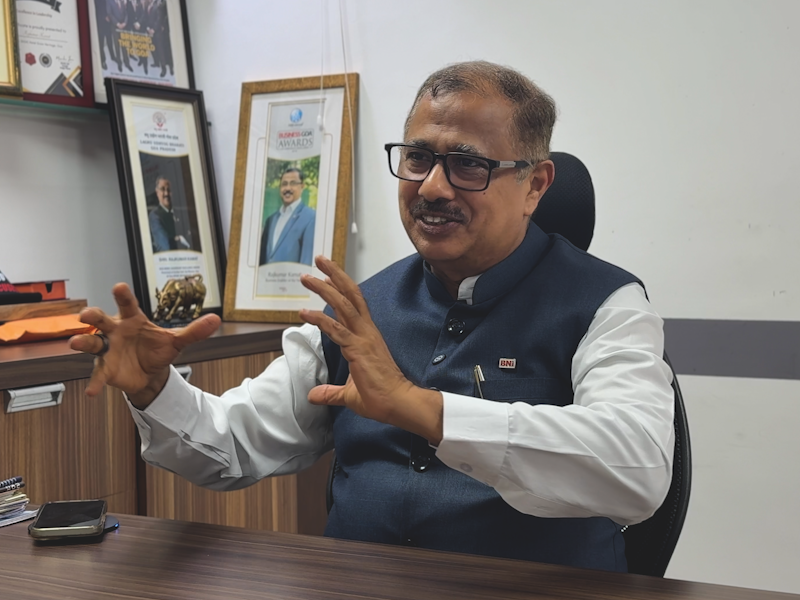
“Here is a first-generation entrepreneur getting into food tech and building a consumer brand not just in Goa but nationally. He has built it to Bharat-scale. He has done it with consistency, quality of his products and his network of retailers and dealers, without ads or an iota of publicity. His is truly an inspiring story. He also generates a large amount of rural livelihood. I really admire him on all those counts,” says Rajkumar Kamath, chairman of Vibrant Goa Foundation, an organization that promotes entrepreneurship, and a successful cleantech businessman himself. In fact, Kurade is so self-effacing that he dodged an award from the foundation for several years, finally accepting it only this year.
But building a successful business in an unlikely category from scratch is just a small part of the Sangam Kurade story. Life forced him to run the same marathon twice over.
When the River Rose
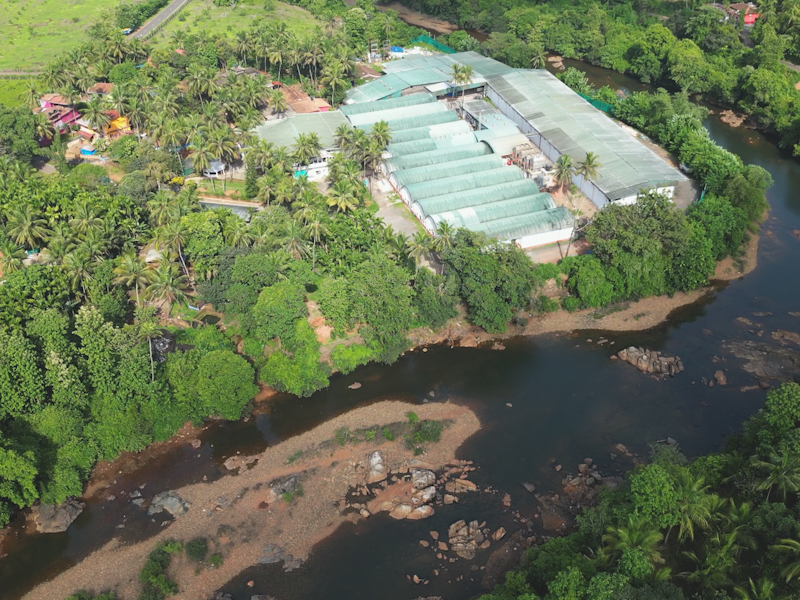
Dr Kurade’s first plant in Canacona’s Bhatpal village is one of the oldest functioning mushroom plant in the country. Its location is stunning even by Goa’s standards of gorgeous landscapes. It is enclosed by malachite-green hills, coconut and jackfruit groves and evergreen trees. The Talpona river makes a sharp bend around its boundary. At this time of the year it should have been gurgling. Instead, the flow can’t even fully cover its rocky bed, making the river look like a famished, bony beast.
The Talpona is a tame, tiny river, only some 30km long. It joins the sea to the west, not very far from here. But on October 2, 2009, it rose up in rage. It swept away everything in its wake. Including the business Sangam Kurade had built over 15 years. In one single day.
“My husband was in the UK on work. My son’s friends had come home because it was a holiday for Gandhi Jayanti. I was cooking and looking after the kids when someone from the factory called. He said the water from the river had risen. I told him a sluice gate might have been opened somewhere and asked him to call the fire brigade as a precaution. He said, ‘But madam, the water is above the factory roof and chairs are stuck in coconut trees.’ I knew it was something serious but couldn’t even imagine the scene. I had only seen footage of floods on TV from places like Uttarakhand,” says Tosha Kurade, Sangam Kurade’s wife and a medical doctor who specializes in industrial and occupational health.
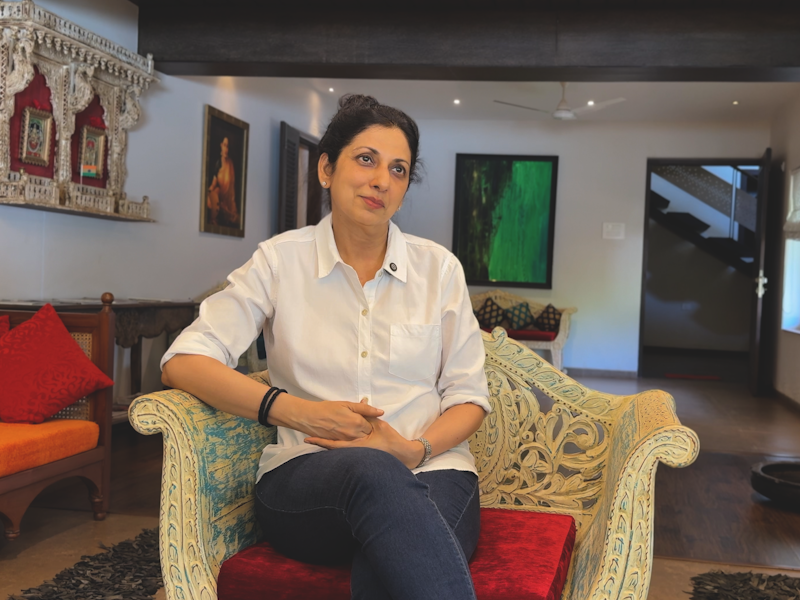
Before Sangam Kurade could land in Goa the next day, Tosha managed to get to the factory 80km from their home in Panaji. Recalling the devastation she witnessed then makes her tear up even today.
“Nothing called a factory was remaining. I could see all the mushroom racks and equipment lying on the public roads far away from the site. All of it was my husband’s hard work. I was with him when he came back because I knew what he would feel. I had always told him he was actually married to mushrooms. He would talk about mushrooms or something related to it all the time. He was so passionate. He broke down. And that I couldn’t take. It made me strong that he broke down.”
Tosha summoned up all her personal savings from a successful career and informed Dr Kurade’s bankers that she’d pay up for all outstanding loans to the last rupee.
It was a Rubicon moment for the Kurades and the business. The floods came at a moment when the business was finally beginning to boom. Folding up or finding another job wasn’t an option for the adventurous and go-getting couple.
“Even today I have a successful practice. If he fails, I’m always there. If he succeeds, I’ll push him further.”
The Kurades resolved that the business should be back on its feet in three months. And it was.
“In 2009, here I had 12 growing rooms, making about one ton per day, coasting merrily with my production. Everything was stable. Suddenly I lost everything. But I wanted to rebuild everything bigger and better,” says Sangam Kurade.
In three months, not only had mushrooms started sprouting again in the plant, the Kurades had put in place a plan to make the business even bigger with a new plant. This time on higher ground and not in the vicinity of the sea or river.
“I remember what happened in 2009. My dad wasn’t in the country and my mum got the phone call. I was playing with my friends from school. I knew something was wrong. When dad came back, he vowed to everybody around that in three months we’d be back up and running, at the cost of his own emotional turmoil, I’m sure. The way he has raised this business is through sheer force, sheer determination. He has bent almost God’s will and brought it back from where it was,” says Anuj Kurade, Head, New Business, Dr Kurade’s, now 28.

Rebuilding Bigger
Even before the floods of 2009, Sangam Kurade knew he had to expand production beyond the six acres of Canacona. The catastrophe, in a way, forced his hand. This was an opportunity to reboot at a bigger scale, with complete vertical integration, from soil to aisle, and even turn the spent mushroom compost into valuable organic fertilizer for other farmers, instead of simply rebuilding the old plant. The bigger plant in Usgaon was up and running by 2014.
But it was Covid-19 that created the runway for liftoff. During the lockdowns, Dr Kurade’s could continue operating as a company selling an essential food commodity. It discovered the power of e-commerce. The new channel was particularly suited to a highly perishable product like mushrooms. Younger urban consumers were already looking for healthier vegetables that were easy to cook.
“Now we are building to scale. Even as I talk to you sitting here, I’m thinking about 2032. By 2027 we should be achieving our ambition to take this company forward. But beyond that, there are other aspects of mushroom cultivation, different types of mushroom, the back end and the forward end, seed cultivation, seed multiplication, manufacturing the soil, manufacturing exotic and new kinds of mushroom. That is bound to take shape between 2027 and 2030. So, as things stand, we have the second generation ready to take over, and the younger generation today has better ideas,” Kurade says.
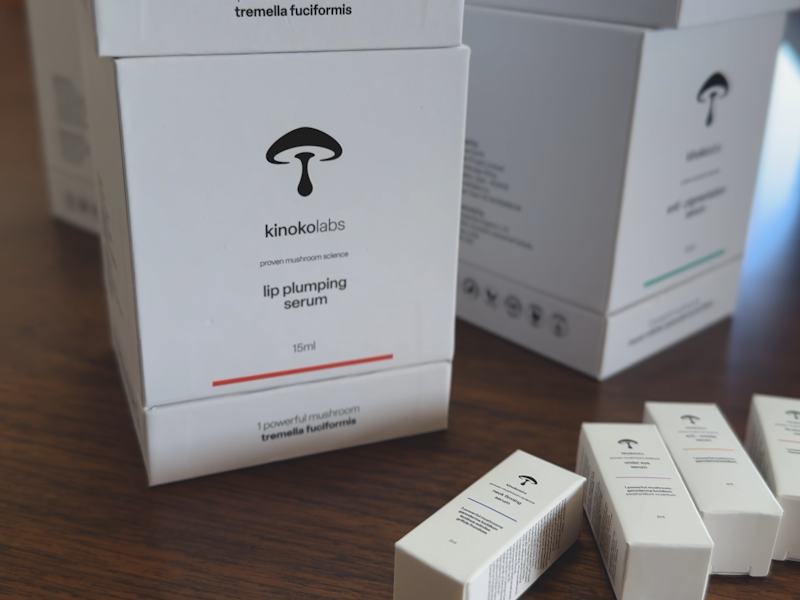
The ambition and innovation notwithstanding, Kurade’s approach to business is conservative if not old-world. He has always relied on bank loans and plowed profits back into expansions, instead of raising money from investors in exchange for equity. That’s probably a reason why he has never advertised. His factories have no large signboards. Even the corporate HQ in Patto, Panaji’s central business district, is hard to locate in the absence of prominent branding.
The Next Generation
For most of Sangam Kurade’s life as an entrepreneur, everything centered around survival. Now as his son Anuj Kurade takes up a bigger role, the priorities are growth and expansion.
“At an Indian wedding buffet, you’ll now most certainly find a mushroom dish alongside the customary potato and paneer. That shows it has penetrated into the Indian diet. But the real fun will begin when people in tier-3 and 4 cities take to it. That’s what we are now building towards. We want to be the house of mushrooms, looking at every aspect of it rather than just as food,” says Anuj Kurade.
Beyond mushrooms as a food, Dr Kurade’s is looking to tap the potential of mushrooms in health and wellness too. This year, Anuj’s team launched a mushroom-based cosmetics and skincare brand called Kinoko Labs.
At 64, Sangam Kurade’s passion for mushrooms is undiminished. Like all Goans, he loves the good life, but has managed to blend ambition and perseverance with Susegad. He says he’s just getting ready for the real mushroom boom: new plants across the country, export markets, mushroom-based health and wellness products, and beating the Chinese at their own game of scale and innovation. The mushroom king of India wants to build a global empire from tiny, take-it-easy Goa.
“It is the story of persistence, resolve, never-give-up entrepreneurship. And I am sure many have gone through it, survived and become big. I’m just one of them. The story of Dr Kurade’s according to me is only halfway there; another 2x-3x is still waiting to happen. Let the mushroom sprout.”


The 500-odd farmers of Gurha Kumawatan, a village in arid Rajasthan, are now millionaires thanks to polyhouse farming. Their hard work, innovation and unlimited ambition offers a path to prosperity for others in India.