Read
Read  Watch
Watch  Listen
  Comment
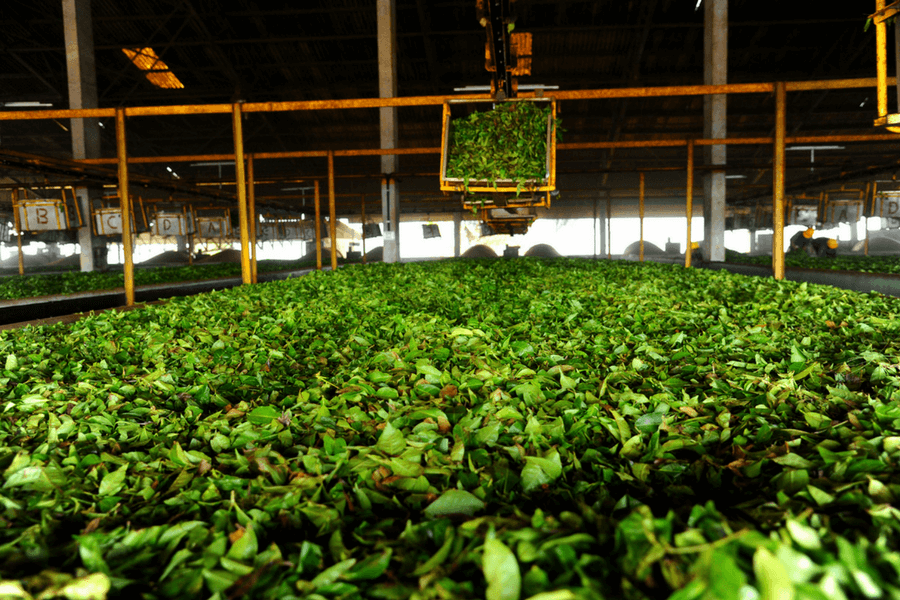
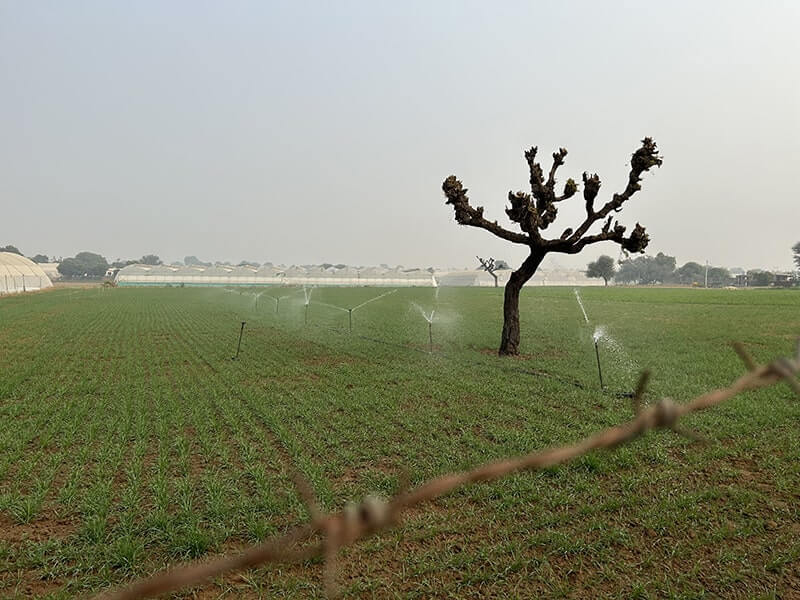
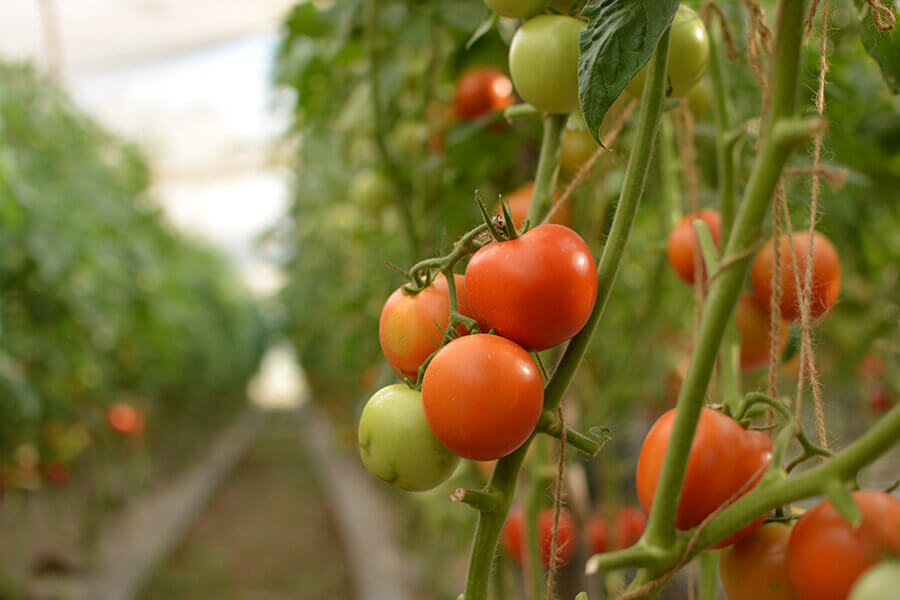
The 500-odd farmers of Gurha Kumawatan, a village in arid Rajasthan, are now millionaires thanks to polyhouse farming. Their hard work, innovation and unlimited ambition offers a path to prosperity for others in India.







By installing on-site biogas plants for bulk consumers, Ahuja Engineering Services is transforming ₹92,000 crores of rotting food waste into a bulletproof renewable energy shield
 Tina Freese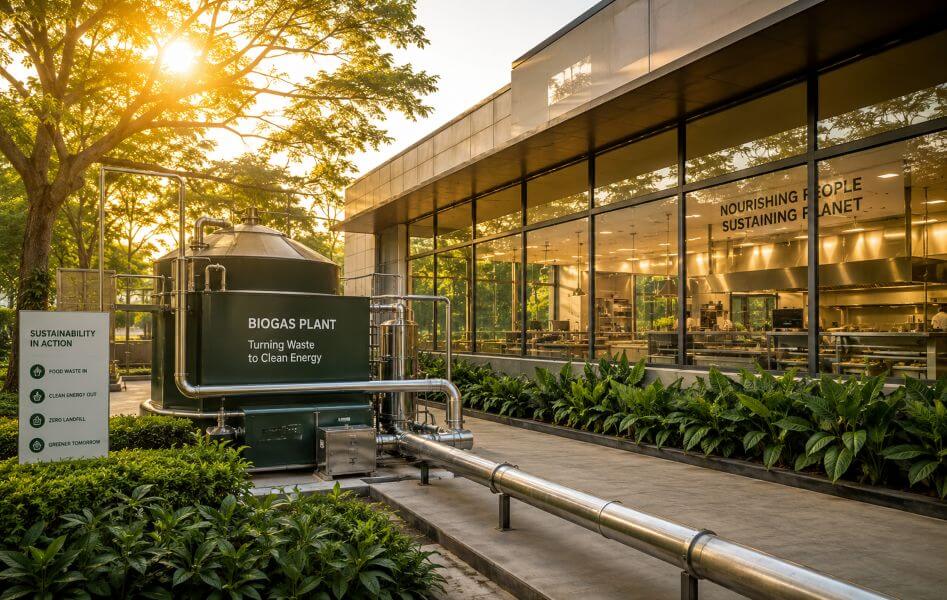
India’s definitive love language is food. From sprawling, extravagant weddings to massive community feasts, we express care through feeding. But this cultural generosity comes with a staggeringly heavy subtext: waste.
Every year, India squanders ₹92,000 crores worth of food—enough to feed the entire population of Bihar. Instead of nourishing people, the vast majority of this surplus ends up rotting in open landfills, off-gassing methane into the atmosphere.
For Sandeep Karajanagi and Disha Ahuja, founders of Ahuja Engineering Services, a visit to one such landfill altered the trajectory of their careers.
“It was an epiphany moment,” says Karajanagi. “We looked at it and realized: this is what we are leaving our children—a world choked by untreated waste.”
In 2017, both scientists returned to India after high-velocity careers in the United States, where Karajanagi had completed a postdoc at MIT and served as a professor at Harvard Medical School. Rather than retreating into the clean comfort of biomedical research, they chose to pivot toward a much messier, more urgent crisis.
The duo’s breakthrough wasn’t just inventing a treatment method, but rethinking the logistics of waste management. Their strategy bypasses the municipal system entirely by treating food waste exactly where it is generated.
“We install a biogas plant directly on the client’s premises, convert the organic waste into gas, and pipe it right back into the kitchen that produced it,” Karajanagi explains. It is a textbook closed loop: no garbage trucks hauling filth across the city, no secondary pollution, and no transport costs.
Ahuja Engineering Services targets bulk waste generators—commercial kitchens, university campuses, hospital canteens, IT parks, and massive market yards—that produce at least 200 kg of organic waste daily.
Their proof-of-concept came through a partnership with the Akshaya Patra Foundation, the giant NGO managing mid-day meal kitchens for school children across India. Over a decade later, the company runs operational plants at 13 different Akshaya Patra locations.
“That longevity really validates our technology,” says Ahuja. The high-calorie food waste from these mega-kitchens goes into the digester; clean biogas is piped straight back into the cooking burners, and the nutrient-dense leftover slurry goes into the institutional gardens as bio-fertilizer.
The corporate and institutional worlds soon took notice. Today, the company’s client roster includes Capgemini, Mahindra University, various CSIR institutes, a major vegetable market in Hyderabad, and even an iconic temple. Collectively, their 36 operational plants span Telangana, Tamil Nadu, Delhi-NCR, Odisha, and Sikkim, diverting over 42 tonnes of food waste from landfills every single day.
The timing of their expansion has proven remarkably prescient. As India navigates erratic LPG supply strains and price volatility in 2026, clients who invested in on-site biogas are completely insulated from the disruption.
“They are reaping the compounding benefits of having independent, renewable energy on-site,” says Karajanagi. “It is helping them effortlessly tide over the current energy crisis.”
Crucially, the company has solved the fatal flaw of historical Indian biogas projects: maintenance. Across the country, thousands of rural and urban digesters lie abandoned due to a lack of technical support. Ahuja Engineering built daily WhatsApp troubleshooting and video-call engineering support directly into their service model, acknowledging that the ground-level staff operating the machinery are kitchen workers, not engineers.
The frontier ahead remains massive. Hyderabad alone generates between 4,000 to 5,000 tonnes of biodegradable waste every single day. The technology is proven, the economics are airtight, and the fuel is sitting in our bins. Now, as Karajanagi notes, the public awareness just needs to catch up to the science.


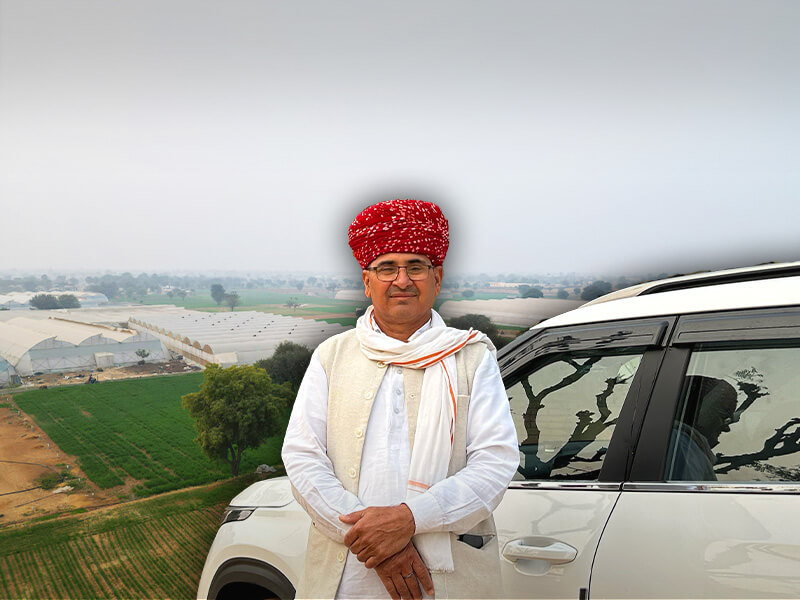
The 500-odd farmers of Gurha Kumawatan, a village in arid Rajasthan, are now millionaires thanks to polyhouse farming. Their hard work, innovation and unlimited ambition offers a path to prosperity for others in India.